
Article by Morgan Granoff, Esq.
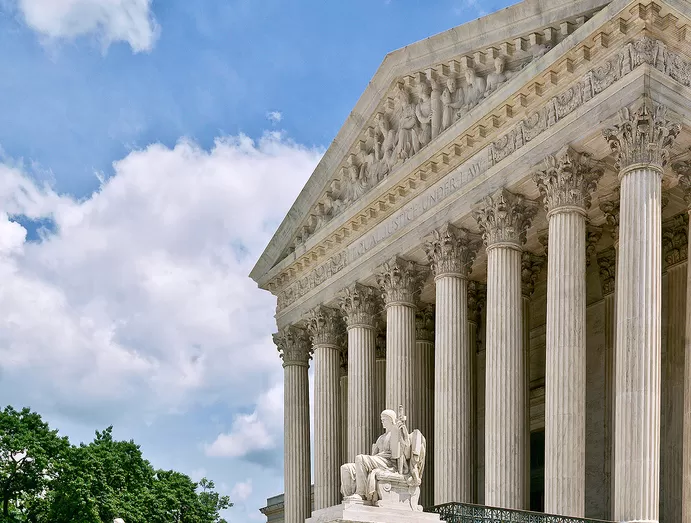
Based on the case: LEARNING RESOURCES, INC., ET AL. v. TRUMP, PRESIDENT OF THE UNITED STATES, ET AL., decided February 20, 2026.
The U.S. Supreme Court got the Trump-Tariffs decision regarding International Emergency Economic Powers Act (IEEPA) wrong for two key reasons: (1) The Supreme Court interpreted “peacetime” way too narrowly, and failed to account for ongoing national security threats to the U.S., and because (2) tariffs function as national security mechanisms implemented through trade policy and must be enacted swiftly and quickly. By imposing tariffs on imports and altering market incentives, they allow a nation to protect strategic national security agendas, industries, and reduce dependence on foreign suppliers, while they apply economic pressure on foreign nations in pursuit of security objectives–all without resorting to military force.
The 6-3 Court of Justices state that their reasoning was due to,
“Article I, Section 8, of the Constitution specifies that “The Congress shall have Power To lay and collect Taxes, Duties, Imposts and Excises.” The Framers recognized the unique importance of this taxing power—a power which “very clear[ly]” includes the power to impose tariffs. Gibbons v. Ogden, 9 Wheat. 1, 201. And they gave Congress “alone . . . access to the pockets of the people.” The Federalist No. 48, p. 310 (J. Madison). The Framers did not vest any part of the taxing power in the Executive Branch. See Nicol v. Ames, 173 U. S. 509, 515. The Government thus concedes that the President enjoys no inherent authority to impose tariffs during peacetime.”
But what really qualifies as “peacetime”? The United States is engaged in ongoing conflicts at all different levels, and other sustained hostilities, including the domestic war on drugs, which complicates any claim that the nation is ever in a state of true peacetime. “As to the drug trafficking tariffs, the President imposed a 25% duty on most Canadian and Mexican imports and a 10% duty on most Chinese imports.” (See the Supreme Court Decision- LEARNING RESOURCES, INC., ET AL. v. TRUMP, PRESIDENT OF THE UNITED STATES, ET AL.,).
See the amount of drugs seized by U.S. Customs and Border Patrol in the last three years.
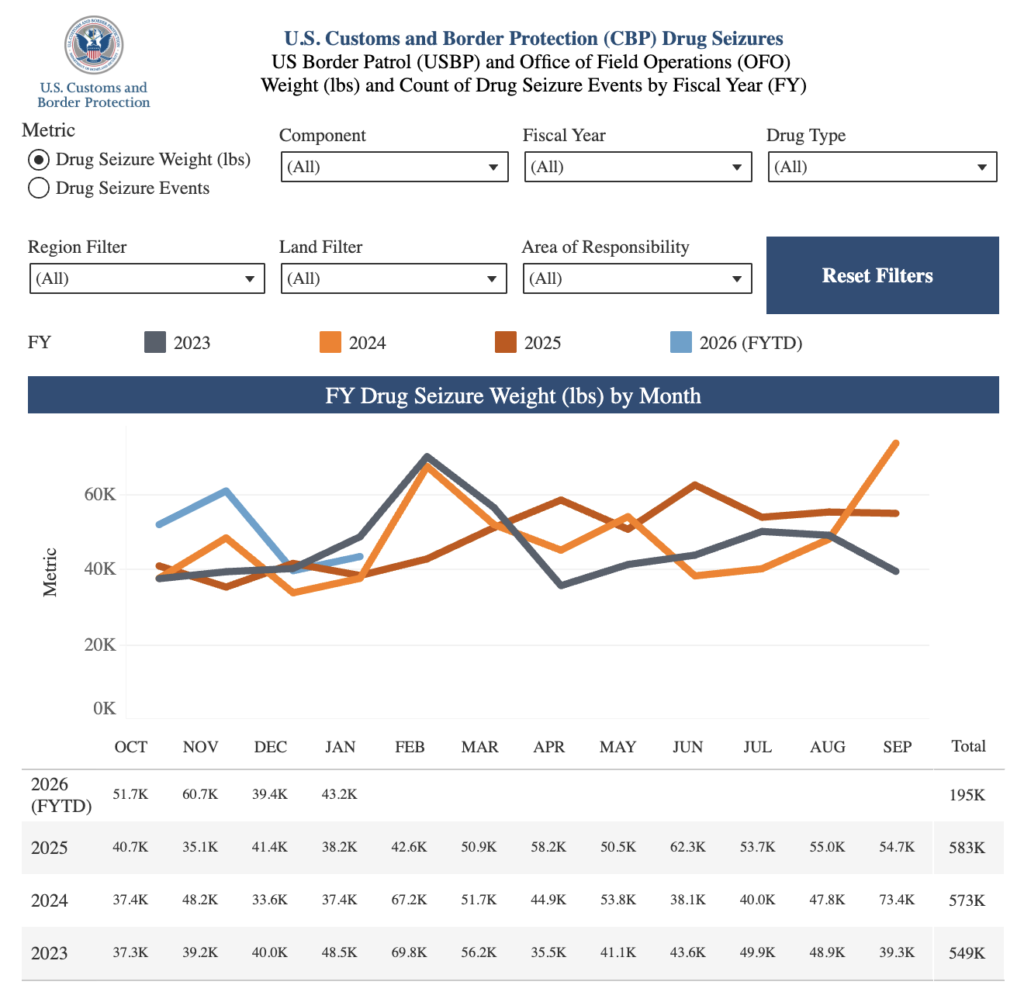
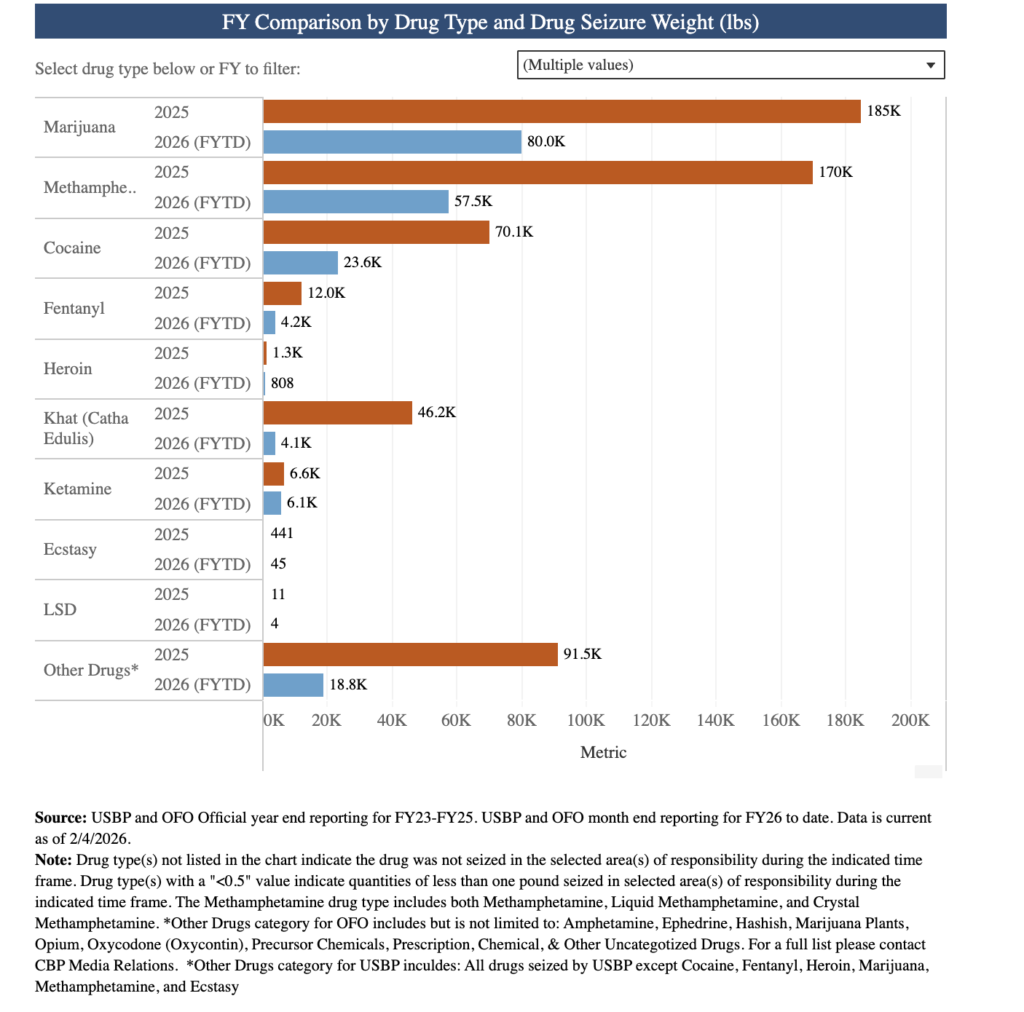
Since Trump took office, drug seizures spiked rapidly. For example, with drugs being smuggled across the Mexico–U.S. border and tariffs on Mexico taking effect in March 2025, the chart shows a clear correlation between seizures and tariffs. This is no coincidence.
However, limiting tariff authority to Congress also significantly strains and constrains the Executive’s ability to negotiate foreign affairs which happen quickly on a moment’s notice. It’s not a surprise that sovereign nations routinely use tariffs as leverage in diplomacy; without such economic tools, conflicts may escalate more quickly rather than be resolved through negotiation.
Next, the Supreme Court’s utilization that no other president has imposed tariffs is not only inconsequential, but it is not so. Presidents have imposed lower tariffs such as via the “The Trade Expansion Act of 1962 (Pub.L. 87–794)” which granted President Kennedy broad authority to reduce tariffs by up to 50% on trade.
The positioning of tariffs that President Trump has used is also clearly indicative of his forward thinking, brilliant entrepreneurial mindset, and indicative of his goal for the United States to domestically thrive in the national security frame and economic frame. The fact that no other President in U.S. history has had the foresight that our president has right now to keep our national security strong, all while bringing businesses back to America, is not only intelligent but it is necessary. Tariffs in this way are a form of protectionism, which is a well identified specific protective foreign policy. Under President Trump’s approach, the government floats tariffs on imported goods to raise their costs, incentivizing consumers to choose domestically produced products and exerting pressure on foreign nations to align with U.S. national security interests. It’s a smart cohesive, twofold ideology.
By raising the cost of foreign goods, protective tariffs incentivize companies to manufacture within the United States rather than abroad, helping to rebuild domestic production capacity and strengthen key industries. Historically, this strategy has been associated with import substitution industrialization, economic nationalism, and broader industrial policies aimed at promoting domestic manufacturing and reducing reliance on foreign suppliers.
Knowing this, President Trump has been working to bring auto-manufacturing back to the United States, and formulated “a proclamation to protect national security by incentivizing domestic automobile production and reducing American reliance on imports of foreign automobiles and their parts.”
- “The proclamation modifies the tariff action on automobiles and automobile parts by encouraging manufacturers to assemble their automobiles in the U.S., thereby reducing American reliance on foreign imports of automobiles and automobile parts.”
- “It offers an offset to a portion of tariffs for automobile parts used in U.S.-assembled vehicles equal to 3.75% of the Manufacturer’s Suggested Retail Price (MSRP) of a manufacturer’s U.S. production for the next year (April 3, 2025 to April 30, 2026), and 2.5% of U.S. production the year after (May 1, 2026 to April 30, 2027).”
(See The Fact Sheet: President Donald J. Trump Incentivizes Domestic Automobile Production, The White House, April 29, 2025).
Now here is where it all get’s interesting, what the Supreme Court truly also got wrong here is that national security is greater enforced by Tariffs and trade in all nations. For instance, “on January 26, Ecuador’s government announced a 900% increase in the tariff for transporting Colombian oil. The measure followed President Daniel Noboa’s decision to impose 30% tariffs on imports from Colombia starting in February, arguing that the neighboring country is not doing enough on security.”
Tariffs are used as strategic tools of negotiation to advance our country’s national security interests without resorting to armed conflict.
Rather than engaging in war, a nation may initiate trade restrictions to apply economic pressure, draw the other country to the negotiating table, and use access to trade as leverage to secure broader political or security objectives.
With all due respect to the Supreme Court justices, each of whom is exceptionally astute, voting 6-3 got this one wrong. However, as Supreme Court Justice Kavanaugh stated, there are allready long-standing Federal Authorities that Trump can use to impose tariffs. And, allowing President Trump to impose tariffs, on things like national security grounds. Therefore, even a strict interpretation of the Constitution on IEEPA Tariffs that overlooks both contemporary threats and the 250 years since the nation’s founding will not stop tariffs for national security, as the United States utilizes and needs these tariffs to protect its strategic position in the world.
https://www.supremecourt.gov/opinions/25pdf/24-1287_4gcj.pdf
https://www.insightcrime.org/news/winner-of-colombia-ecuador-trade-war-could-be-organized-crime