
Article by Morgan E. Granoff, Esq. Licensed Attorney at Law.
An Asylum Cooperative Agreement (ACA) is an arrangement between the United States and a foreign country that allows certain asylum seekers arriving in the U.S. to be transferred to that country to pursue their claims there. The U.S. Department of Homeland Security (DHS) handles the motion for transfer in immigration court and an immigration judge presiding over the case either agrees and allows for transfer or disagrees and decides there can be no transfer. While the Department of State negotiates the agreements with the foreign territory, these agreements are not published so the contents of what entails are not widely known. Under an executed ACA, asylum seekers are required to continue their asylum process in a “safe third country” instead of remaining in the U.S.
To even enter Asylum Court, an applicant must file within the strict one-year deadline—late by even a single day can bar the claim. Now, it has become more difficult, as Asylum Cooperative Agreements allow DHS attorneys in Removal hearings to request that a judge send the applicant to a designated country to pursue asylum there. While more countries may have such agreements, we will focus on the most common for informational purposes.
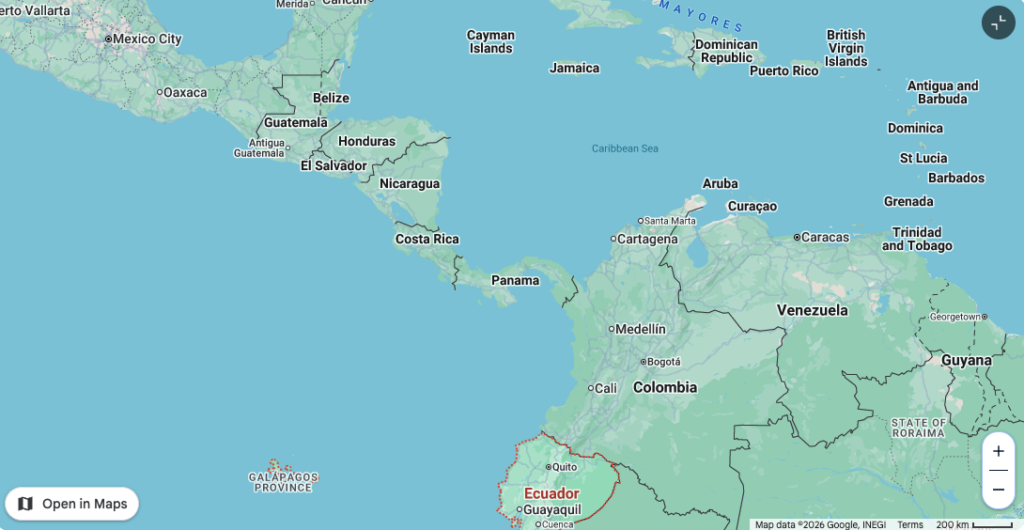
Because these agreements are not fully published, the exact procedures, conditions, and protections for asylum seekers remain unclear. Currently, Honduras, Guatemala, and Ecuador are the most frequently designated countries. In effect, ACAs allow the U.S. to redirect the processing of asylum claims abroad while maintaining that asylum seekers still have access to protection.
The U.S. is now sending immigrants to Honduras, Guatemala, and Ecuador to continue their asylum claims if the ACA is approved by Immigration Court. Unlike before, simply applying for asylum at the border no longer guarantees a stay in the U.S. while the case is pending. Judges are placing cases in a “pending” status while immigrants must respond to DHS motions to transfer them under an ACA. If the immigrant prevails, they can continue pursuing their asylum claim in the U.S.
Since these Asylum Cooperative Agreements have been made, the Department of Homeland Security (DHS) is saying, essentially, it is ok for immigrants to continue to fight for asylum, but just not in the U.S.A. And since these countries are allowing these people to process their case there, it is also not quite clear what this really this means, or how these agreements will be carried out. And, this reality is hitting hard for many immigrant families in Removal Court who have pending asylum applications.
An asylum cooperative agreement allows the U.S. government via the Department of State to work with the foreign countries and process our asylum seekers in their countries. These agreements are not fully published, so it’s difficult to know the conditions that the person will have if they are to be sent to these countries to seek asylum.
Is it fair?
People have the legal right to apply for asylum in the U.S. unless they can be sent to another safe country via a valid agreement. However, the country must first provide “access to a full and fair procedure for determining a claim to asylum” in order to qualify as safe.

Pictured, Ecuador.
In Board of Immigration Appeals Case, (Matter of C-I-G-M- & L-V-S-G-) it establishes that if the Department of Homeland Security (DHS) invokes an ACA, the burden is on the applicant to prove they will more likely than not be persecuted in the third country.
If the Department of Homeland Security claims that an asylum cooperative agreement
bars a respondent from applying for asylum in the United States, the Immigration Judge
should determine whether the safe third country bar applies prior to and separate from
considering a respondent’s eligibility for asylum.
A respondent subject to the terms of an asylum cooperative agreement has the burden
to establish by a preponderance of the evidence that he or she will more likely than not
be persecuted on account of a protected ground or tortured in the relevant third country
to avoid application of the safe third country bar and for the respondent to be eligible to
seek asylum and other protection claims in the United States.
So, (1) Prove that the Safe Third Country Bar Applies, (2) Fight for the Asylum petition.
This case involves the safe third country bar to asylum under section 208(a)(2)(A) of the INA, 8 U.S.C. § 1158(b)(2)(A), and the authority of Immigration Judges under 8 C.F.R. § 1240.11(h) (2025) to apply bilateral or multilateral agreements between the United States and countries other than Canada. Matter of C-I-G-M- & L-V-S-G-

Pictured, Guatemala.
One important exception is that these Asylum Cooperative Agreements cannot apply to (1) unaccompanied minors, or (2) people who are involved in certain criminal activity, or (3) a person who is the subject of an Interpol Red Notice.
Some things to look up and are important are if you need a visa to enter or work in these places. Just because the U.S. government says that they can send you there, does not mean that you can legally be there. For instance, needing a visa to live or work could disqualify someone from being subject to these agreements. These agreements also do not apply to a person who is fleeing from these exact places. Thus, if someone flees Honduras for asylum, they cannot be sent back to Honduras via this Asylum Cooperative Agreement.
So what do you do if the U.S. government seeks to dismiss your case based on the fact that you can live in these safe third-countries? In my opinion, hire a lawyer, speak about the facts of your specific case, and see if you are able to request an exemption because more likely than not- you cannot live in these third countries for fear of re-deportation to your country of origin that you seek asylum in.

Pictured, Honduras.
https://www.ilrc.org/community-resources/asylum-cooperative-agreements-what-you-must-know
https://www.justice.gov/eoir/media/1416811/dl?inline
https://www.turismo.gob.ec/entry-requirements-to-ecuador-through-land-borders